


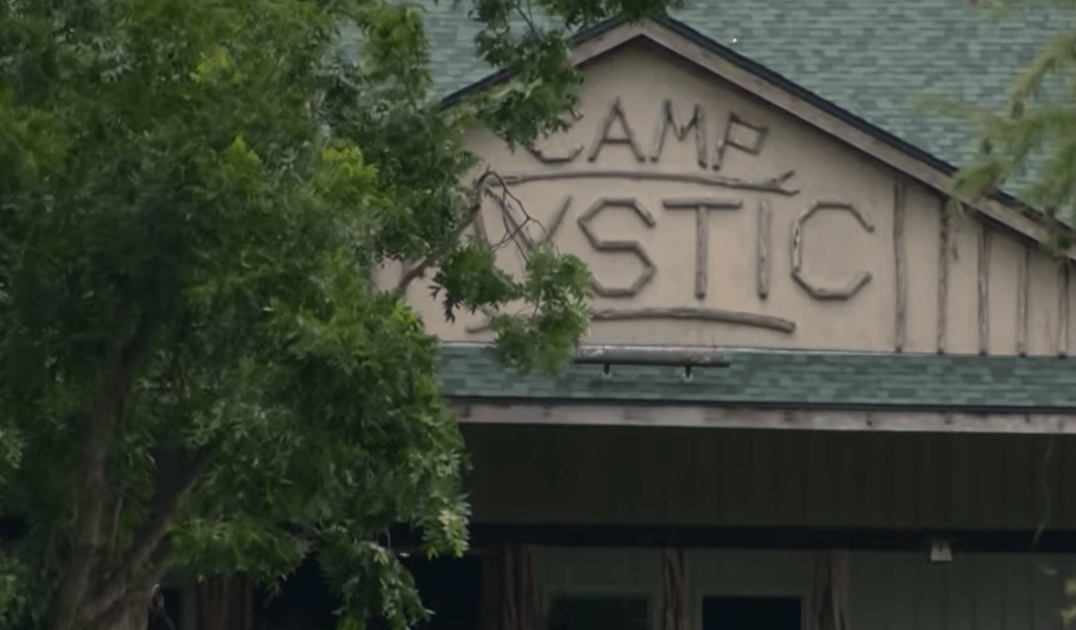
Standing on the banks of the Guadalupe River in Hunt, Texas, almost a year after the water tore through everything, has an almost surreal quality. The trails worn down by decades of summer footsteps, the cabins that once housed sleeping girls, and the silence that now permeates a space that once rang with voices—all of these things bear the weight of what transpired here on July 4, 2025. For many generations of Texas families, Camp Mystic was a summertime destination where girls could go fishing, canoeing, horseback riding, and Bible studies. The Eastland family operated it for a century with the pride that comes from creating something that outlasts you. The river then appeared.
Twenty-five girls and two teenage counselors at the camp’s Guadalupe River location perished in the flood. Dick Eastland, the camp director, was among the 28 fatalities. Few disasters have the same impact on the nation as this one due to its scope, suddenness, and victims’ ages. Then came the lawsuits, as is often the case when grief turns into doubts. Five of them were filed by families who feel that the deaths were the result of choices made by those who ought to have known better rather than just an act of God.
During a legislative hearing in April, an investigator stated that the camp lacked a written evacuation plan for flooding, that camp counselors lacked emergency training, and that Camp Mystic leaders had a “complacent” attitude toward flooding before the disaster. These results were not well received. For months, the families who filed the Camp Mystic lawsuit had been claiming that warnings were disregarded, that the evacuation decision-making timeline was unethical, and that profit calculations were being made while the weather outside worsened. The whole picture may still be more intricate than any one story can convey. However, it is hard to justify the lack of a written evacuation plan at a camp located in a known flood zone.
Nine Camp Mystic families filed a lawsuit against Texas officials earlier this year, claiming that the Texas Department of State Health Services had violated their daughters’ constitutional rights to life and bodily integrity by inspecting and licensing the nearly 100-year-old camp two days prior to the flood, even though there was no legally mandated evacuation plan. That is a more comprehensive indictment of the regulatory framework that was meant to protect children as well as the Eastland family.
Then, almost exactly one day before the anniversary, the bankruptcy filing arrived like a gut punch. Camp Mystic filed for Chapter 11 bankruptcy reorganization, estimating its assets to be between $100,001 and $500,000 and its liabilities to be between $10 million and $50 million. All five pending lawsuits were automatically put on hold as soon as the filing was made. Six of the victims’ families were represented by attorney Kyle Findley, who was straightforward in his response: the bankruptcy filing suggests that the owners don’t have the funds to cover the litigation’s outcome, and legal experts predict that this will make it harder for the families to get compensation.
This has developed in a way that makes it difficult to ignore the pattern. Camp Mystic promised that no camp activities would take place in the low-lying flood area and invited lawmakers and journalists to review safety improvements before calling off plans to reopen. In order to keep cases out of public courtrooms, they advocated for arbitration. Only when public pressure became intolerable did they withdraw their license application. And now, just a few days before a year has passed, the bankruptcy filing arrives, stopping everything, starting over, and leaving families to spend another Fourth of July weekend without a resolution.
According to legal experts, the most typical result of a bankruptcy like this is that the lawsuits would not resume in their current form but would instead be settled through a trust financed by company assets and insurance proceeds, with plaintiffs pursuing compensation through the trust rather than through individual litigation. It is another matter entirely whether that trust would provide anything near sufficient. A bankruptcy may reorganize debts, but it cannot reorganize the truth, according to one lawyer.
That’s what matters most to the families who are holding pictures and waiting for a body that hasn’t been found yet. Money was never the only issue in the Camp Mystic lawsuit. It concerned someone being made to appear in court and provide a straightforward explanation for what transpired on July Fourth. It remains to be seen if bankruptcy postpones or completely terminates that reckoning.
