


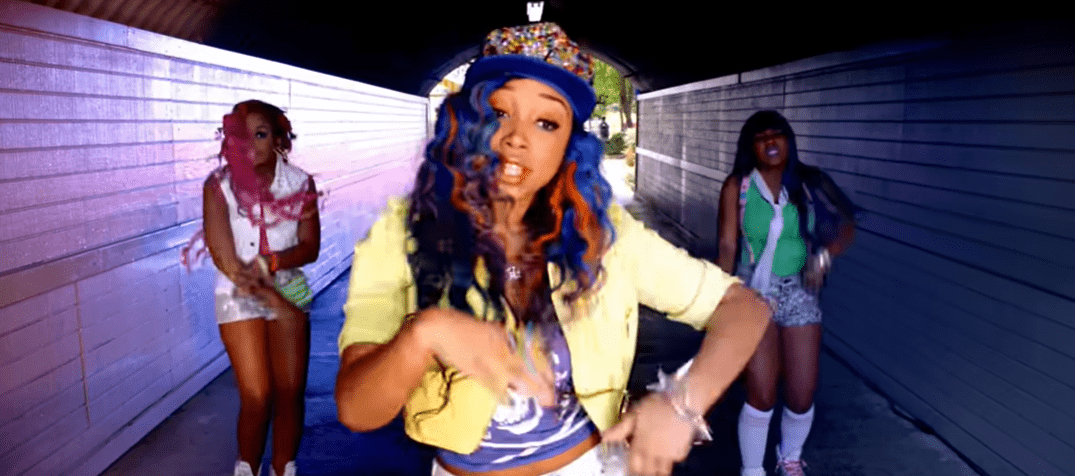
A scene from a Santa Ana, California, federal courtroom keeps coming up. On June 23, 2026, three women who used to perform for teenage audiences across the nation—Zonnique Pullins, Bahja Rodriguez, and Breaunna Womack—are seated at the plaintiff’s table. They are witnessing their appearance, hairstyle, and sense of style being contested for the fourth time in front of a new jury. 2009 saw the formation of the OMG Girlz. In 2015, they parted ways. And for some reason, they’re still in court over ten years later.
The fourth trial revolves around a single, narrow question: how much punitive damages, if any, should MGA Entertainment pay for violating the group’s trademark and stealing its likeness? The jury in that courtroom is already aware that MGA was found liable by a prior jury, which awarded compensatory damages of about $17.8 million. It’s not changing. Whether this was carelessness or something more intentional is the unanswered question that keeps drawing people back under the fluorescent lights of a federal building in Southern California.
The verdict of $17.9 million in compensatory damages and $53.6 million in punitive damages from the third trial, which lasted three weeks, seemed to many observers to be the conclusion of a drawn-out and taxing process. It wasn’t. “There was no reliable evidence that MGA had any knowledge of the group’s trade dress or desire to use their likeness to create the infringing dolls,” wrote Judge James Selna, who subsequently determined that the plaintiffs had not proven by clear and convincing evidence that MGA engaged in punishable conduct.” One dollar was all that remained of the $53.6 million. Tiny and T.I. had to decide whether to return or accept the $17.8 million and leave. They returned.
Reporters were informed by their attorney, John Keville, that his clients “disagree that the punitive damages evidence was insufficient” and that MGA’s willful misconduct would be the sole focus of the new trial.It’s difficult to ignore the genuine annoyance in that. Three mistrials or overturned verdicts, six years of litigation, and the couple behind the OMG Girlz are still attempting to prove what a jury has already found twice.
The lawsuit focuses on allegations that MGA imitated the OMG Girlz’s appearance, branding, and general image, including the performers’ unique hairstyles, wardrobe selections, and branding. Attorneys displayed pictures of particular OMG Girlz performances and tour dates alongside the dolls during previous proceedings. Depending on which side of the courtroom you are seated on, this kind of comparison can either seem obvious or completely coincidental. During his testimony, Isaac Larian, the founder of MGA, repeatedly denied any connection and referred to the couple as extortionists. You never forget that word.
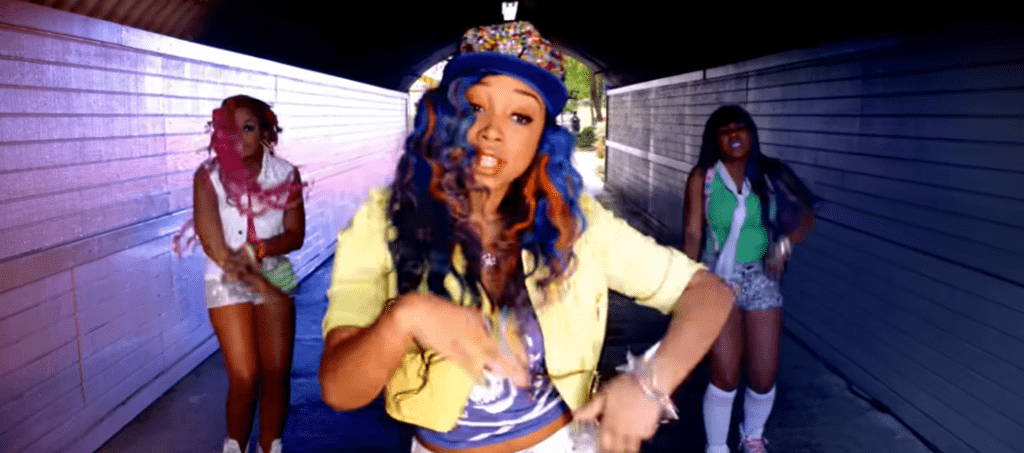
The acronym “OMG” is so common in popular culture, according to MGA’s lawyers, that it cannot be used as proof of deliberate copying. There is some logic to that argument, but it also conveniently avoids what jurors discovered in 2024: the similarities went far beyond three letters. Even Judge Selna seemed dubious about relying too much on the acronym.
The number in the middle of this fourth trial is what really sets it apart. The $125 million in punitive damages that the plaintiffs are now requesting more than doubles the $53.6 million that a previous jury had awarded before the court rejected it. In cases of likeness misappropriation, nine-figure punitive awards are practically unheard of. Nobody can say with certainty whether a jury in Southern California will find anything near that amount against a business that sells tens of millions of dollars a year. However, no one was able to predict the $71 million verdict with any degree of confidence.
Based in Chatsworth, close to Los Angeles, MGA is one of the biggest toymakers in the world. Since their 2019 release, their L.O.L. Surprise! O.M.G. dolls have been among the most popular toys worldwide. In this case, that scale is important. Profits on seven particular dolls were used to compute the compensatory damages. Theoretically, the purpose of punitive damages is to deter future wrongdoing by sending a message about what happens when a company the size of MGA makes a mistake, whether on purpose or not.
Singer Victoria Monét, who openly accused MGA of using her music videos as inspiration for Bratz promotional material, has been cited by attorneys for T.I. and Tiny as proof of a larger pattern of behavior. It remains to be seen if the current jury will accept that argument. MGA has vigorously defended itself, claiming that irrelevant accusations have no place in a trial that is solely concerned with punitive damages. It’s a valid objection. It’s also precisely what a business would say if it didn’t want a jury to consider a pattern of behavior.
Observing this case from the outside gives the impression that it has expanded beyond dolls, damages, or even T.I. and Tiny in particular. For artists who don’t own major labels or toy companies, it’s become a test case for what intellectual property protection actually means. These artists’ creative identities are found in their performances, photographs, and colored wigs rather than in registered patents. When the OMG Girlz developed that identity, they were teenagers. Regardless of the jury’s decision, there’s a chance that the debate over whether it was worth protecting will continue long after the verdict.
