


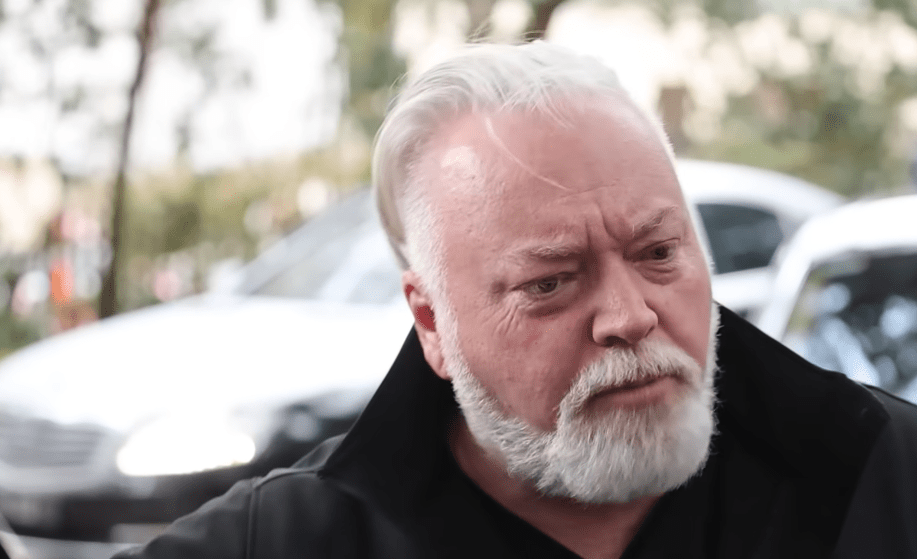
On that Wednesday morning in June, Kyle Sandilands appeared, by most accounts, more relieved than victorious when he stepped out to face the media cameras. He described the protracted legal battle as “boring as hell.” He calculated that he would receive about $15 million in total compensation. He grinned. He went on. And someone was probably grinning even more somewhere in an ARN Media boardroom.
One of the most well-known and contentious legal disputes in Australian radio was settled for A$12.09 million, of which $3 million was paid in cash as early as July and the remaining amount was paid in monthly installments until June 2029. Additionally, $1.5 million in advertising is available on ARN’s platforms to support Sandilands’ next media endeavor. On the surface, it seems generous. That is not exactly how economists who have closely observed this case see it.
At first, Sandilands had sought $85 million. He thought that amount represented what was left of his $100 million, ten-year contract after ARN broke it up in March after just one year. The trigger was a seven-minute on-air confrontation with his co-host Jackie Henderson on 20 February, during which he accused her of being distracted by astrology and not pulling her weight. Henderson sobbed. The video went viral. Due to serious misconduct allegations, ARN acted swiftly, taking the show off the air and ultimately terminating the contracts of both hosts.
We should take a moment to consider that timeline. A show that had dominated Sydney breakfast radio for more than thirty years came to an end after a single on-air argument, no matter how awkward or public. The Kyle and Jackie O Show wasn’t just popular; it was a commercial fixture, built on crude humour and loyal listeners who’d grown up with it. Whether ARN saw the February incident as a genuine crisis or a convenient exit from two very expensive contracts is, at this point, a fair question to ask. Reports that staff within ARN had quietly celebrated the show’s end don’t exactly suggest a company devastated by what happened.
Sandilands says he tried to fix things. He apologised to Henderson shortly after the fight, he told reporters, but was then barred from contacting her or any of the show’s staff in the weeks that followed. He offered to work with a different co-host if that’s what it took to get back on air. According to his account, ARN had no interest. The Federal Court was never given the opportunity to hear it tested in a proper trial, regardless of whether that is the whole story or not.
The outcome on Wednesday was described as a “exceptionally good deal” for ARN by economist Conrad Liveris, who had initially projected that Sandilands would settle for between $10 million and $30 million. It’s difficult to disagree. In addition to having paid a small portion of its contractual obligation, the broadcaster also received a 19.9% cut of Sandilands’s next venture’s earnings for the following three years. Additionally, until March of next year, he is prohibited from working for any ARN competitors. Therefore, the man who filed a lawsuit to be freed is still working for the company that fired him for a while.
Henderson’s situation remains separate and unresolved. In response to the termination of her own ten-year, $82 million contract, she is suing ARN. Given the outcome of Sandilands’ case, calculations regarding her floor are likely taking place on both sides. Given the circumstances of how this entire episode started, Liveris’s suggestion that she might eventually walk away with a larger settlement would be an ironic footnote to an already convoluted tale.
The more intriguing question for Sandilands is in the upcoming chapter. He claims to be heading toward independent media, most likely podcasting or streaming of some sort. This shift is being softened by the ARN advertising deal, which seems like a strange move from a company that just months ago accused him of grave misconduct. The whole arrangement seems a little strange, with the acrimony of a federal court dispute giving way to what is essentially a business partnership. Australian media being what it is, stranger things have happened.
He says he’s happy. He probably is. $12 million is not a bad landing after a dispute he admitted was “daunting” to carry. But the man who once commanded a $100 million contract is now building from scratch, his future audience still theoretical, his new platform not yet launched. Whether that turns out to be a setback or a reinvention is the only question left worth watching.
