


Employees at a Costco on Tamarack Avenue in South Windsor, Connecticut, discovered something wasn’t adding up on a Sunday afternoon. Two customers were trying to pay at the self-checkout, but the cards they were using weren’t theirs. Not a single one. 28 credit cards with 28 different names were discovered when South Windsor police searched the suspects’ car. None of those individuals were suspects.
Kasheem Williams, 34, of Brooklyn, and Brittany Howard, 35, of the Bronx, are said to have attempted the same routine earlier that day at a Costco in Enfield. The two were still present when police arrived because the Enfield store had flagged workers at the South Windsor location. A phone call between two stores probably made the difference between an arrest and a clean getaway, which is the kind of detail that makes you realize how narrow the margin really was.
There is more to this case than just its audacity. It’s the approach. Retail theft has long targeted self-checkout lanes, and warehouse stores like Costco are particularly appealing due to their large quantities and high cart values. It is quite different to leave a store with $500 worth of goods on a fraudulent card than it is to do the same at a grocery store. The scale is important.
Howard and Williams were accused by the police of conspiracy, third-degree identity theft, 28 counts of payment card theft, and second-degree larceny. Additionally, it was discovered that Howard had an active credit card theft warrant from Hudson County, New Jersey, indicating that this was not his first attempt. Williams had warrants for assault and burglary from Suffolk County, New York. They were both secured by $250,000 surety bonds. Those warrants are difficult to avoid interpreting as a pattern rather than a coincidence.
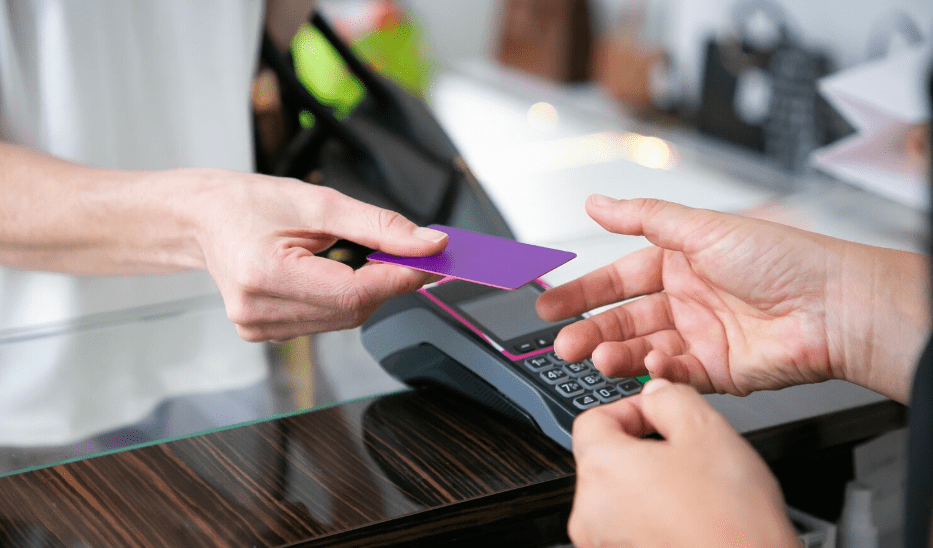
Fraud involving self-checkout is not a recent development. However, Costco’s unique circumstances in 2026 add a fascinating layer. At a few locations, the retailer is currently testing what it refers to as “Automated Pay Stations”—large-format kiosks intended to significantly reduce transaction times, allegedly down to eight seconds. A member’s cart is pre-scanned by a staff member while they wait in line, so by the time the customer gets to the kiosk, everything has already been totaled. They swipe or tap and leave.
It’s a significant change in operations. It’s still unclear if it makes fraud more difficult. There is at least some friction because the system is membership-gated and card-only. However, having a card—just not a legitimate one—is a prerequisite for credit card fraud. There is a perception that issues that are essentially about human behavior and opportunity are rarely resolved by technology alone.
Sam’s Club’s Scan & Go system has drawn comparisons, and some Costco customers have publicly stated that a phone-based checkout might be more difficult to use with physical counterfeit cards. To a certain extent, that’s probably true. Scammers adjust. They have consistently done so.
Above all, the South Windsor case shows how large-scale retail theft functions more like organized fraud than shoplifting. Dozens of cards, two individuals, several locations, and active warrants in several states. Opportunism is not what that is. It’s a system. And on an otherwise typical Sunday, Costco, for all its operational efficiency, found itself in the middle of it.
