


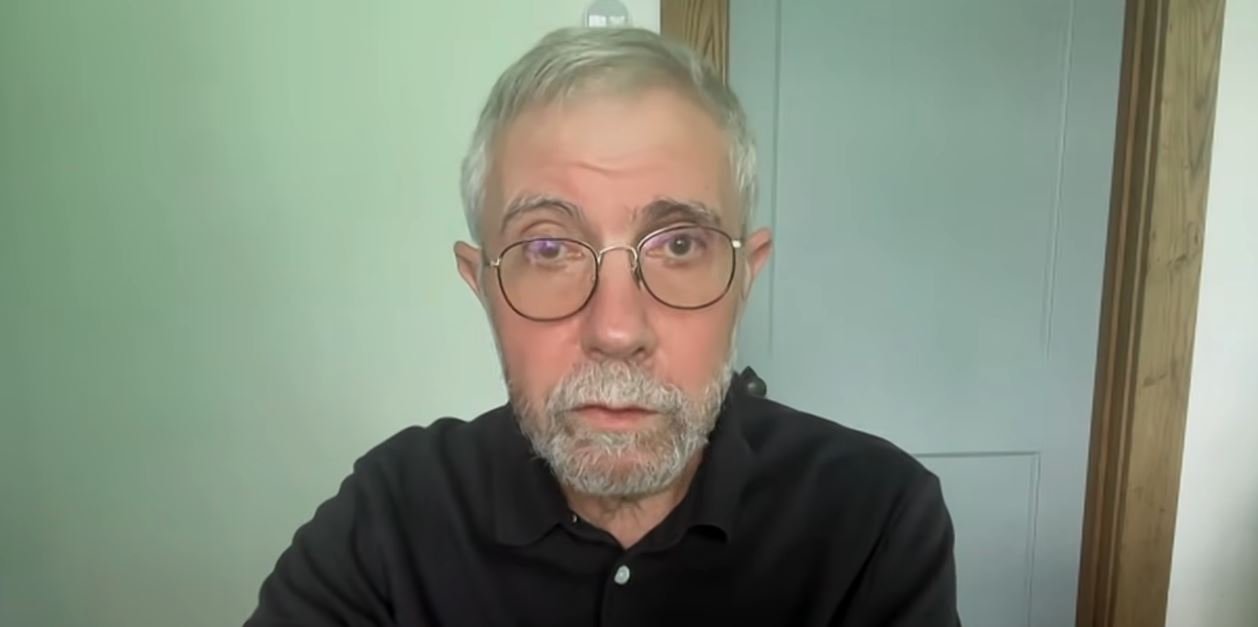
Watching two economists argue over the same data and come to completely different conclusions is almost like watching a play. That’s what’s happening right now between Nobel laureate and longtime Fed skeptic Paul Krugman and Kevin Warsh, who was just named chairman of the Federal Reserve two weeks ago. Their disagreement isn’t just about how the American job market is doing. It’s a sign of a bigger fight that will involve the bond market, the White House, and whether millions of American workers should be optimistic or worried about the coming months.
The job market was called “soft” by Krugman on Bloomberg Television, and Warsh’s tone “disturbed” him. That word means something. Not scared or worried; just upset. Like someone who is trying to be polite while watching a friend make a bad choice at dinner. Krugman is cautious because the numbers show that hiring has been patchy, payroll growth was slow for most of 2025, and the recovery seems fragile enough that being too sure of itself could do real harm. He has said that real inflation is around 2.5%, the unemployment rate has stayed around 4.3% for a long time without getting better, and calling this a booming market is, at best, premature.
Warsh, on the other hand, gives off a feeling of buoyancy. “I think there will be more jobs and more prosperity,” he said not long ago. “In the middle term, the United States is likely to be a big winner.”” It’s the kind of forward-looking optimism that sounds good in a press conference but makes some economists pull out their reading glasses and double-check the tables from the Bureau of Labor Statistics. A good jobs report in June gave Warsh some ammunition.
Traders started betting more on a rate hike by the end of the year, and at least one Wall Street bank started predicting a series of hikes starting in December. A Fed governor named Christopher Waller said that job growth in 2025 would be “Zero. Zip. Nada.” Things have definitely gotten better since then. The real question is whether they’ve gotten better enough.
It’s not just the intellectual sparring that makes this disagreement interesting to watch. It’s about the institutions at stake. President Trump chose Warsh because he thought rates would go down. Now that the job market is getting better, rates could go the other way. This could cause a fight between the new head of the Fed, the bond market, and the White House, which often uses interest rate policy as a personal scorecard. Jason Furman, a Harvard economist and former Obama adviser, said in a polite way when Warsh was first nominated: “If Trump really thought Warsh would do what he wanted, he would have picked him a year ago.” Furman said that he agreed with Trump’s reading more than Krugman’s on that point. But Furman himself said he was nervous.
People who follow the market think that this fight isn’t really about the June payroll numbers or the quarterly changes to GDP. It has to do with what kind of Fed we’ll have. Krugman has been saying for decades that too much tightening kills recoveries. Warsh seems to think that showing confidence, even when the facts aren’t clear, is a form of economic management. Both points of view have been taken before. Both have been wildly wrong at different times as well.
The honest answer, which neither side is fully willing to accept, is that the job market is currently “balmy,” or warm and pleasant, but almost ready for some air conditioning. That’s how The Economist recently put it, and it makes sense. The unemployment rate hasn’t gone up or down, but it hasn’t changed much either. Wages are going up, but not very quickly. After a bad stretch, hiring picked up, but no one is calling it a boom except people who have a reason to sound positive at work.
Most likely, how regular workers feel is somewhere in the middle. There are still “Now Hiring” signs in Austin, where the barista works. Not as many recruiter emails are going to the mid-career software engineer in San Jose as there were two years ago. Those two things can be true at the same time. This debate is more than just a cable news segment because of the tension between them. People really don’t agree on where the U.S. economy is going or who should be in charge of the story while we find out.
