


The fact that property valuations from 1991 are still used to calculate council tax bills throughout England is almost absurd. That year, John Major was prime minister, the internet barely existed in public life, and houses in London cost a fraction of what they do today. Nevertheless, the system hasn’t changed after three and a half decades. Andy Burnham has observed this. Additionally, he appears sincere about taking action if he is appointed prime minister, which now seems more like a question of when than of if.
Burnham has been making noise about property tax reform for years, long before his leadership ambitions crystallised into something concrete. As mayor of Greater Manchester, he often pointed to the centralisation of economic power in London as one of the country’s deeper structural problems. He believes that property taxes are a component of that same distortion. The current system discourages people from moving up or down the housing ladder by rewarding inertia and penalizing movement through stamp duty and council tax bands based on outdated valuations. According to a recent statement from a tax reform group, this arrangement completely eliminates the concept of fairness.
A move toward a land value tax, or LVT, is the proposal that is receiving the most attention. Rather than taxing the transaction at the point of sale — which is what stamp duty does — an LVT would apply an annual charge based on the underlying value of the land itself. The annual percentage under discussion is approximately 0.48%. The logic is straightforward enough: land value reflects the investment of the surrounding community — schools, transport, infrastructure — not just the effort of the individual owner. Landowners might be encouraged to develop or sell rather than sit on valuable plots doing nothing if it were taxed annually as opposed to episodically.
This is politically charged due to its geographic location. Since 1991, property values have increased significantly in London and the southeast, but they have increased much more slowly in many areas of the north and midlands. Revaluing the system, or replacing it with a land-based charge, would almost certainly mean higher bills for southern homeowners and lower ones for many in the north. Burnham is aware of this. It seems to be part of the point.
Stamp duty, too, is in his sights. The ongoing shortage of family homes is exacerbated by the current fee, which deters people from downsizing. Theoretically, eliminating or lowering it as part of a larger move toward yearly property taxes could free up housing stock without necessitating the laying of a single brick.
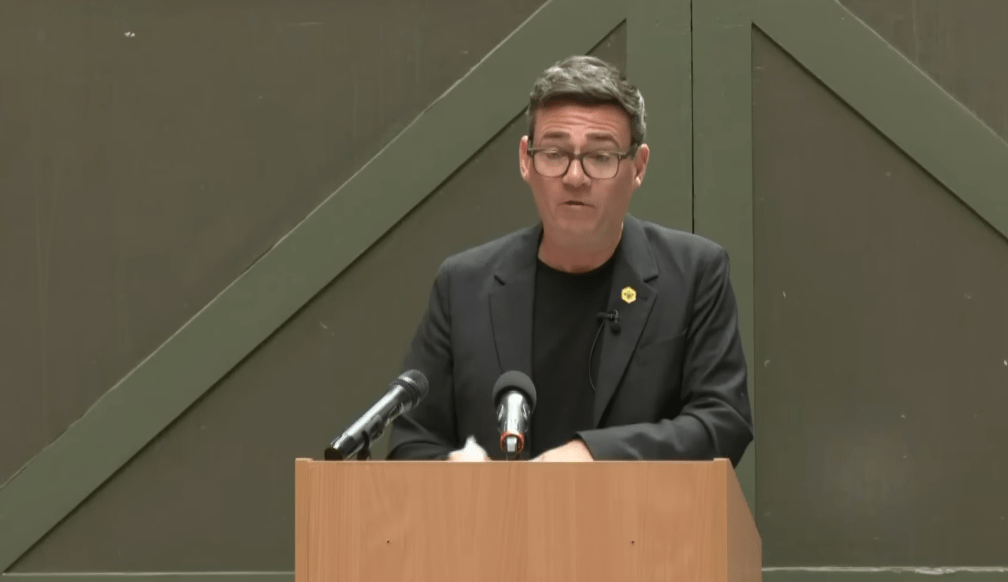
How far Burnham would actually push any of this is still unknown. Without endorsing any particular tax policies, his June speech outlined a broad economic vision. Perhaps on purpose, he has taken care to maintain flexibility before any budget. Decisions regarding property, succession planning, and liquidity events become more difficult when no one can predict what the regulations will look like in a year. Tax experts and advisors are already pointing out the uncertainty as a problem of its own.
What is evident is Burnham’s belief that land and wealth taxes are consistently lower than those on labor income. His remarks about property, inheritance, and capital gains all reflect this instinct. It fits well with that perspective to reform council tax and replace stamp duty with something more structurally coherent.
Whether voters go along with it is a different question entirely. Property in Britain isn’t just an asset — it’s an identity, a retirement plan and, for many people, the largest financial decision they’ll ever make. Few governments have been willing to take on the political risk of touching it. It appears that Burnham is placing a wager that the risk is worthwhile because the current system is no longer defendable.
