
The majority of Americans will never pay enough attention to a certain map. Yap State, a part of the Federated States of Micronesia, has a population of slightly more than 11,000 people and is located somewhere in the western Pacific, dispersed over half a million square miles of ocean. Just one hospital. A ship can reach eighteen outer islands four times a year. And a health department that ought to be overburdened by any standard measure.
In actuality, it is overwhelmed. That’s the part worth understanding. Without the staffing levels, infrastructure, or funding that American public health administrators would consider even minimally functional, Yap’s Department of Health Services oversees a population burdened by rising rates of cancer, diabetes, hypertension, heart disease, and stroke. Thirty-five percent of Yap’s residents live on remote outer island atolls, where healthcare means a small dispensary and, in most cases, a family member stepping in to do what trained staff cannot.
And yet, something interesting has been happening there. Yap’s health system has been doing what underfunded systems sometimes do better than well-funded ones: it has been innovative about how it uses the people it already has, instead of waiting for more resources that aren’t coming.
The Pacific Islands Geriatric Education Center ran a 32-hour caregiver training program in partnership with Yap’s Department of Health Services in October 2017. A structured train-the-trainer program was completed by twenty-seven participants, including community health workers, nurses, peer educators, health assistants, and even doctors. Adding another level of bureaucracy was not the goal. The point was to multiply the reach of knowledge that already existed inside the system. Five trained individuals are created from one. Five turns into twenty. That logic makes sense in ways that American health administrators occasionally overlook in a place where filial care is simply assumed by tradition and there is no such thing as a nursing home.
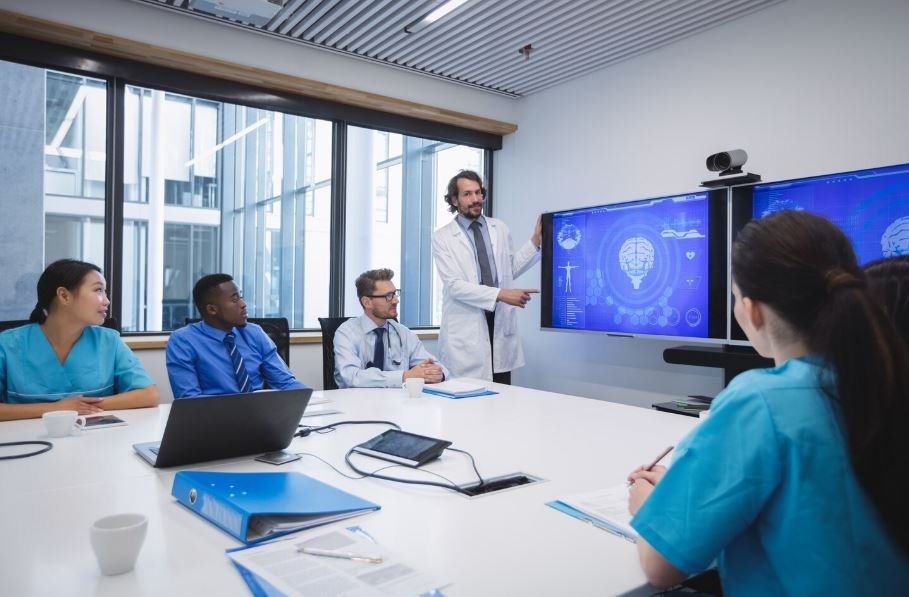
The contrast is difficult to ignore. While public health departments at all levels report feeling hollowed out, particularly since 2020, the United States has spent years debating workforce pipelines, credential requirements, staffing ratios, and licensing reciprocity. The discussions are genuine. The problems are real. However, the idea of developing capacity within communities rather than just filling positions has somehow been lost in the policy debate.
Yap also had another workforce challenge that had nothing to do with hiring. As a sign of respect, visitors to the outer islands were required by a custom known as “Kaptel-Wa” to present alcohol and tobacco to the Chiefs. It was customary for any health outreach team that arrived to work in those communities to take part in reinforcing the very behaviors that were increasing the rates of chronic illness and cancer. Over 43% of people over 15 who lived on outer islands smoked tobacco, and about half chewed it.
The next step in the Yap Comprehensive Cancer Control Program is worth a closer examination. Rather than treating this as a cultural obstacle to route around, they spent a year engaging the Chiefs directly — sharing data, building relationships, explaining what non-communicable diseases were doing to the population those Chiefs were responsible for. The result was a policy shift at the chiefly level that opened the door to broader health interventions. It took time for it to happen. It didn’t happen through a mandate. It occurred as a result of someone realizing that workforce strategy is about bringing people into the workplace rather than just hiring them.
That’s a lesson with reach well beyond Micronesia. American public health has a workforce problem that funding alone won’t fix. Jobs remain unfilled. Burnout is widespread. Job postings don’t fix the deterioration of trust between communities and institutions. If the system is willing to train, trust, and allow the people closest to a problem to take action, Yap shows, albeit imperfectly and under extreme constraints, that they frequently hold part of the solution.
Whether that model works well in a nation as big and structurally complex as the United States is still up for debate. The political landscape has changed. Different paths are indicated by the institutional incentives. However, the idea of a small island health department operating with nearly nothing and figuring out how to increase its reach by investing in the people who are already there is worthwhile. It’s not a miracle. It’s a method. And it might be worth taking seriously.
