
An IRS building outside of Atlanta has a leaky roof that has been dripping for years. In a sort of duct-tape engineering that reveals more about the condition of federal real estate than any oversight report could, workers have set up garden hoses and plastic bags to divert the water. A tax agency processing trillions of dollars while patching its own ceiling like a dorm room in college is an odd sight.
It’s not an anomaly. Federal employees nationwide are reporting to work in offices with mold growing on the walls, rodents scuttling through hallways, and elevators that sometimes simply stop functioning while people are inside. Visitors to a VA office in Hilo, Hawaii, have expressed dissatisfaction over mold that was visible upon arrival. Being trapped in an elevator is a known risk rather than a freak accident in Oakland. All of this is not concealed. Simply put, it has been neglected for a very long time.
The Public Buildings Reform Board estimates that deferred maintenance has cost about $50 billion, which is a figure that is almost too big to be true. However, it has been accumulating for decades, one neglected repair at a time, and the board has cautioned that the cost of fixing everything could surpass the government’s entire real estate portfolio in a few years. It’s worth pausing to consider that. In the near future, the cost of repairs could surpass the value of the buildings.
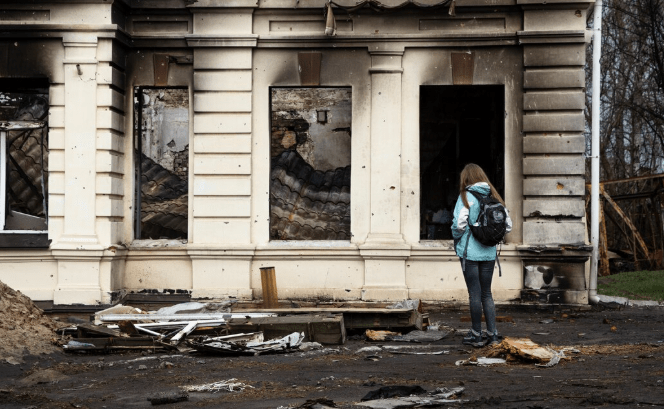
The timing is what makes this more difficult to accept. This decay coincided with last year’s push to reinstate federal employees in the workplace, pushing more people into buildings that had been steadily deteriorating while everyone worked from home. The irony of telling employees that the office is necessary while the office itself is unable to keep out the rain is difficult to ignore.
In a bureaucratic sense, a portion of the issue is structural. Congress must approve any significant repairs to a GSA-run building that cost more than about $3.96 million. That seems reasonable until you consider that, at a time when dozens of elevators across the country need to be replaced, that sum hardly covers three. On average, the approval process takes 435 days. In the meantime, expenses rise, issues worsen, and structures continue to deteriorate beyond the point at which minor repairs would have been effective.
An excellent illustration of this in action is the Kennedy Federal Building in Boston. In 2016, a proposal to renovate its electrical, HVAC, and roof systems was first presented to Congress. The cost has increased by over 400% since then. In the last two years, at least 49 people have been trapped inside the building’s over thirty-year-old elevators. It’s the kind of slow-motion failure that doesn’t make news until something goes wrong and demands attention.
Additionally, there is an older pattern that extends beyond office buildings. Politicians are rewarded for initiating policies, not for maintaining them, according to long-standing critics of government maintenance. Campaign advertisements with new programs work well. Roof patches don’t. Prior to Hurricane Katrina, New Orleans’s levee system experienced a similar situation: years of inadequately funded, disjointed oversight for which no one felt personally accountable until the effects were too great to ignore.
It’s still unclear if federal office buildings will ever reach that kind of breaking point. In order to address the math issue without addressing the maintenance issue, GSA has proposed reducing its office space by half and relying more on leased buildings. As of right now, workers in Oakland, Atlanta, and Fort Worth continue to arrive at buildings with water advisories and mold reports attached to their morning emails. It’s an odd kind of normal, and it doesn’t seem like it will change anytime soon.
