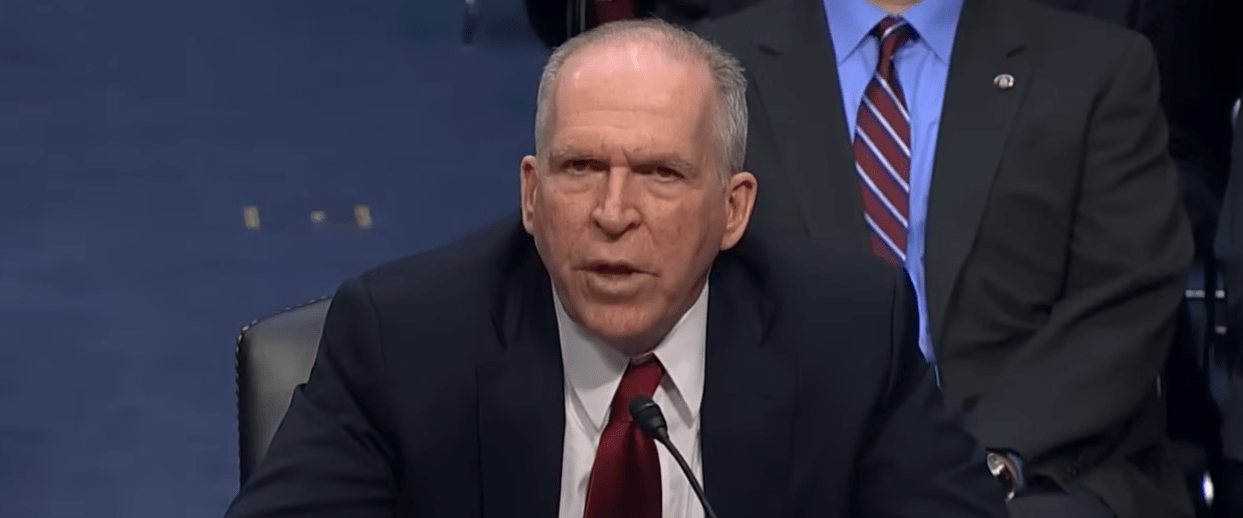
The former director of the CIA sued the Trump administration on Wednesday, asking a federal judge in Washington, D.C., to tell the government to keep records related to the investigations that are still going on against him. It’s not common for people to sue before they are even charged, but Brennan’s lawyers seem to think that waiting is safer. Based on the administration’s track record with keeping records safe, that worry is understandable.
As the lawsuit puts it, the investigations are based on harsh language: Brennan (external site) is being investigated for what it calls “phantom criminal conduct,” which is not based on evidence but on the president’s long-standing grudge against him. The document says that Trump has attacked Brennan by name more than 100 times since 2017 in person or in writing. That number, which is used a lot in the lawsuit, is meant to do a certain legal job: it shows a pattern, the kind of pattern that can help a prosecution’s case for vengeance if charges are eventually brought.
There are two separate investigations going on, and they both seem to be based in Florida. The first one looks into whether Brennan lied to Congress in 2023 about an intelligence report about Russian interference in the 2016 election. The other is more general and looks into whether Brennan and other former law enforcement and intelligence officials worked to hurt Trump, even during the Russia investigation. There are no charges yet. Brennan has said he did nothing wrong.
The lawsuit is interesting for more than just the legal parts. This is the main point that isn’t being said directly: the investigations are the punishments. Brennan’s team is basically saying that if there is an indictment, it will be because the White House wants it to happen, not because they really believe someone did something wrong. “That is why he is being singled out,” the filing says, pointing out that the real reasons for the scrutiny are his public criticism of Trump and his job as CIA Director. That point of view might be right. It’s also possible that the judge thinks it’s too early. Either way, making it this early—before charges, before arraignment, or any of those things—is a planned move.
Trump, acting Attorney General Todd Blanche, FBI Director Kash Patel, White House Chief of Staff Susie Wiles, CIA Director John Ratcliffe, and several Florida prosecutors are named as defendants in the lawsuit. Such a long list of people is very disturbing. The length of that list makes it seem like Brennan’s lawyers aren’t trying to settle this quietly. They want everyone who is part of the record to know that it is being made.
In the filing, there is also a more practical concern. There is what Brennan’s lawyers call a “well-founded concern” that important records, like emails, calendar entries, and private messages, could be lost before any court has a chance to look at them. It’s a strong accusation, even if it’s put in careful legal language. On the other hand, the Justice Department pushed back for a short time. Emily Covington, a spokeswoman for the company, said it was “certainly rich” that Brennan was accusing anyone of a revenge campaign. However, that comment doesn’t say anything about the lawsuit itself.
If you watch this, you can’t help but think about what it means when a former CIA director sues the president before he’s even been charged with anything. No matter what you think about Brennan’s politics or his time at Langley, the situation is more serious than just one man’s legal problems. It makes you think about where the line is between legal prosecution and political pressure, and who gets to decide what that line is.
This doesn’t answer that question. It might take a long time to settle. This is now officially known because of the lawsuit, which was likely the point.