
It seemed like the money would never stop for ten or so years. Writers’ rooms were growing, studios were greenlit into a frenzy, drone operators were reserved months in advance, and streaming platforms were engaged in an open bidding war for anyone with the ability to type a script or hold a camera. The calculation appeared straightforward: more subscribers led to more content, which in turn led to more subscribers. Nobody wanted to be the first to admit the equation had a ceiling.
A sobering story is revealed by the numbers. In comparison to the same period in 2022, US film and television production decreased by about 40% in the second quarter of 2024. Globally, the decline sits around 20%. Unemployment in the film and television sector hit 12.5% in August of that year — and industry insiders believe the true figure is higher, since many crew members either don’t qualify for unemployment benefits or have simply exhausted them after months of waiting for a phone that stopped ringing.
What happened is not exactly a mystery. Oversaturation was the result of the streaming wars, which Hollywood chose to overlook despite economists’ predictions. There are too many platforms chasing too few hours in the day, and each one is spending excessively to defend its own existence. In 2020, Netflix alone added 37 million new members, setting a record that seemed unbreakable at the time. Disney+ hit 100 million in just 16 months. Investors were in awe. Content budgets ballooned.
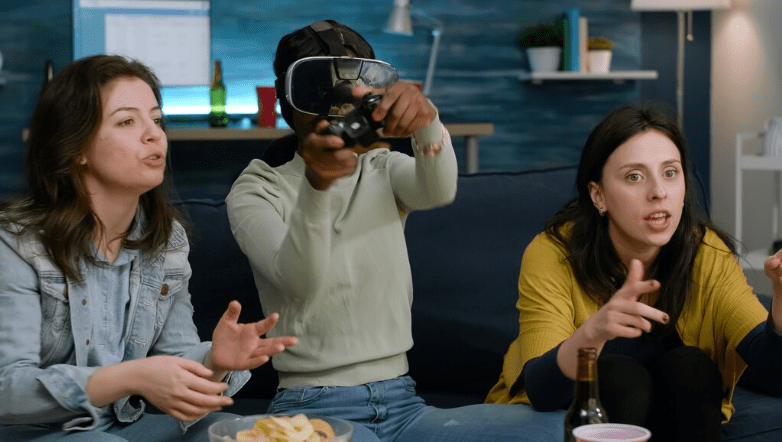
The growth charts stopped cooperating after the pandemic ended and people returned outside.
The industry was rocked by Netflix’s early 2022 prediction of just 2.5 million new members. Investors wiped out nearly $300 billion from both companies’ market values when combined with Disney’s difficulties. That kind of figure has the power to alter boardroom discussions. Layoffs, project cancellations, budget cuts, and the dissolution of entire production teams were all part of the quiet, painful retreat that followed rather than a strategic turnabout.
Speaking with those who work in the field gives me the impression that the loss is still very much present. In less than a year, Michael Fortin, a drone operator who gained ten years of consistent employment flying over Hollywood sets for Netflix, Amazon, and Disney, was facing eviction twice. His tale is not the only one. It is an example of a workforce that scaled up, thinking the demand was structural, only to discover it was situational.
For their part, studios aren’t just acting carelessly. They’re trying to recalibrate for a world where cable television’s advertising revenue is gone and streaming subscriptions alone can’t sustain the cost structures that were built during the boom. The math that once seemed obvious now requires rethinking from scratch. There is still no definitive solution, at least not one that the industry as a whole has agreed upon, for how a big media company makes money on streaming at scale.
It is evident that the days of using volume as a strategy are over. Risk aversion has set in. Reports suggest that roughly 90% of projects currently moving forward are based on existing intellectual property — sequels, reboots, franchise extensions. There are fewer and fewer original ideas that once drove writers’ rooms and gave unknowns a chance. It’s a defensible instinct. It’s also a narrowing one.
According to media analyst Matthew Belloni, the content bubble has deflated. There is no more air. What’s left is an industry attempting to define sustainability and a labor force bearing the experiment’s expenses. There were winners in the streaming wars. The question of whether audiences will ultimately benefit from what comes next is still up for debate and most likely will be for some time.
