
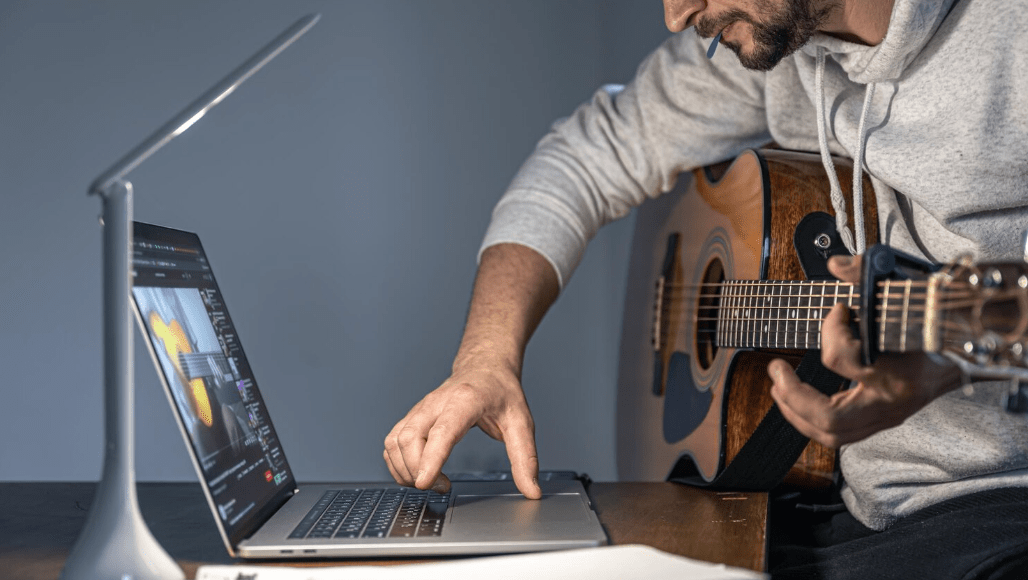
When speaking with independent music producers—those who operate out of home studios and view audio engineering as both a day job and an art form—a certain number keeps coming up. It is $100. In particular, $100 was made from about 400,000 streams. Composer Richard Pryn reached that exact number after releasing thirty albums on streaming services over the course of six months. 400,000 listeners. One hundred dollars. This type of math interrupts you in the middle of a sentence.
Independent musicians have long felt uneasy in the streaming economy, but something about the present feels different. The grievances are no longer theoretical. Producers are using calculators to come to difficult-to-explain conclusions. Spotify pays out between $0.003 and $0.005 per stream on average worldwide. At the lower end of that range, you can make about $3,000 from a million streams, which is about the price of a reasonably priced used car. That’s a million people who have chosen to hear your music.
The way the platform presents its economics makes this more difficult to accept. There is no set fee per stream for Spotify. It uses what it refers to as a “streamshare” model, which involves combining all monthly subscription and advertising revenue and allocating it according to each artist’s share of total streams. That makes sense in theory. In actuality, it means that regardless of whether your own streams increased or decreased, your monthly earnings vary according to what every other artist on the platform is doing. Individual contributions are almost intentionally diluted by this system.
Most producers don’t fully understand the additional layer of complexity that geography adds until they are staring at their royalty statements. Approximately three to four times as much money is made from a stream from a premium subscriber in the United States as from a free-tier listener in Southeast Asia or Latin America. This can discreetly cut expected earnings in half for an independent producer whose audience happens to skew international, which is increasingly likely given how algorithmic recommendations operate. That information is not prominently displayed on the platform. Digging is how you find it.

The 1,000-stream minimum for 2024 followed. Before a song receives any royalties at all, Spotify now demands that it receive at least 1000 plays annually. Micro-royalties from low-activity tracks, according to the company, should be redirected toward more streamed content because they were administratively complicated. That threshold is met in a matter of hours for major label releases. It may take months or never happen for an independent producer to release experimental or niche content into a crowded market. A floor that many small artists relied on is subtly removed by the policy.
The ownership structure that lies beneath all of this, however, is worth considering. Spotify owns a portion of DistroKid, which manages distribution for a large number of independent artists. Major label shareholders own sizable stakes in Spotify. The platforms that distribute royalties, the businesses that collect them, and the labels that split the profits are not distinct, rival businesses. They are connected in ways that don’t clearly give the producer at the bottom of the chain priority.
Some artists have begun to completely circumvent the system. The numbers for direct sales are startling: ten purchases of a five-dollar album result in fifty dollars and real customer information, including email addresses, purchasing patterns, and a relationship. Three dollars are generated from a thousand streams, but you get nothing. With a thousand users paying $100 a year, the “1,000 True Fans” model generates a six-figure income without the need for a platform middleman. Although it’s not a viable option for everyone, it seems to be the only one that doesn’t depend on potentially nonexistent institutional goodwill.
Speaking with producers who have been in this business for a few years gives me the impression that the disillusionment isn’t solely related to the money. It’s about hearing that the system functions if you simply keep releasing music, that the exposure is worthwhile, and that the streams grow audiences. When you look at the numbers, you’ll see that it primarily affects the infrastructure that surrounds the music. Not for the creators.
