
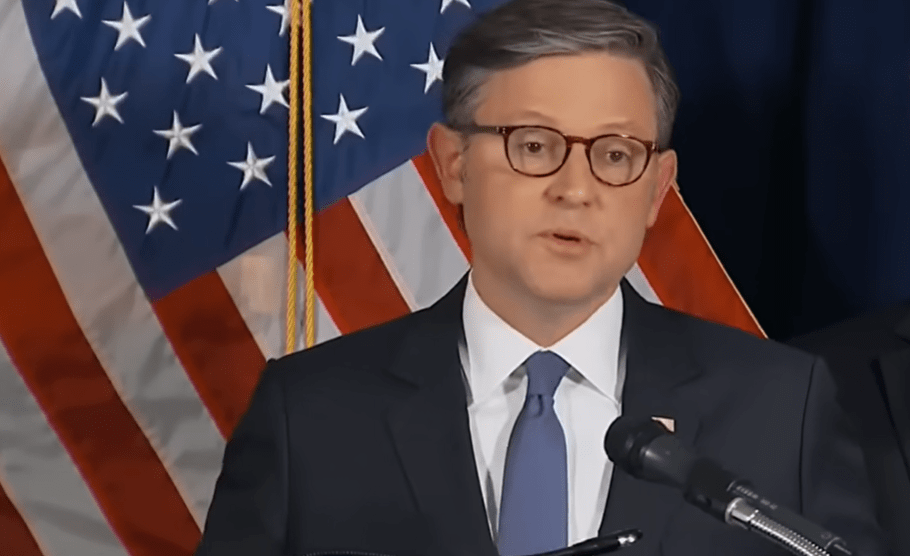
In Washington, it has developed into a sort of custom that no one acknowledges enjoying but that nevertheless keeps happening. Republicans in the House spend weeks marking up spending bills, getting them approved by committees, and issuing press releases detailing their progress. Then, as the floor vote draws near, something goes wrong. It’s usually the numbers. Politics can be the cause at times. It was both this week, entangled in a procedural maze that Speaker Mike Johnson is still attempting to resolve.
Two fiscal year 2027 appropriations bills, the State-Foreign Operations bill and the Energy-Water measure, would have been up for floor discussion and passage if House Republican leaders had not discreetly canceled a planned procedural vote on Wednesday. There was no statement included with the cancellation. It was revealed to reporters by sources under the condition of anonymity, which is a signal in and of itself. When leaders are unable to publicly declare their own plans, it usually indicates that those plans fell apart more quickly than anyone had predicted.
The SAVE America Act, a Republican elections bill that requires proof of citizenship for voter registration, was the immediate cause of the uprising by conservative hardliners who wanted it to pass before the spending bills in the floor queue. Leadership is placed in a nearly impossible situation by this demand. The Senate does not have enough votes to approve the elections bill. With October’s government funding deadline just a few months away, pushing it ahead of legislation that does runs the risk of wasting time the party can’t really afford. Refusing the hardliners, however, puts their cooperation on the very spending bills that need to be moved at risk. In the narrow-majority House, this type of circular standoff has practically become the norm, and witnessing it unfold once more carries a certain weary familiarity.
The housing bill was what complicated and exposed this week. With strong bipartisan support, the 21st Century ROAD to Housing Act passed both chambers, a vote that members from competitive districts can genuinely discuss back home. Then, insisting that Congress pass the SAVE America Act first, Trump called off the signing ceremony. A bill that has already passed the Senate must now be approved before it can be signed. Arizona Senator Ruben Gallego declared on Thursday that until the housing bill is signed, he will not allow any House Republican legislation to pass the Senate by unanimous consent. The ripple effect has begun to spread.
It’s a different version of the same issue in the Senate. Susan Collins, the chair of the Appropriations Committee, canceled a markup of four bills on Thursday due to the bipartisan top-line spending negotiations between ranking Democrat Patty Murray and Collins. Sen. John Kennedy of Louisiana put it bluntly: a shutdown right before November appears, from some perspectives, to be a political advantage, so his Democratic colleagues won’t agree to a spending cap or vote for appropriations bills. Republicans control both chambers and the White House, and if they could reach a consensus among themselves, they could pass a budget, Democrats countered.
Republicans in swing districts, who were counting on the housing bill as a tangible platform to run on, seem to be the most irritated by all of this, as they watch it remain unsigned while the leadership engages in negotiations with factions that appear to have completely different goals. Democrats want to shut things down, according to Sen. Shelley Moore Capito. Republicans were referred to as the Keystone Cops by Senator Chris Murphy. It’s likely that both characterizations are taking on a bit too much work. The more straightforward and depressing explanation is that it’s election season, the margins are narrow, and everyone is calculating rather than leading. Johnson’s ability to resolve the spending bills before members begin to depart Washington for the summer is still up in the air. October is rapidly approaching, and the strategy to prevent another shutdown is still, for the time being, unwritten.
