


Seeing a government building designated for demolition in a city where nearly every other building appears to be vying for preservation status is subtly startling. Savannah doesn’t take things lightly. It creates commissions, argues, and restores. However, the city has very little control over the demolition of Juliette Gordon Low Building A, which is located on Telfair Square’s northeastern trust lot, which is scheduled to begin on May 25.
The building is owned by the General Services Administration, and unlike everything else on the square, federal property is not subject to local preservation boards. This distinction is important. At his press conference on Tuesday, Savannah Mayor Van Johnson stated that the GSA’s decision does not require any kind of city permitting. Seeing a structure in the center of a historic district violate the laws governing its neighbors is an odd feeling.
The stated justification offered by GSA is fairly simple: a building that no longer pencil out to continue operating, years of neglected maintenance, and no future federal tenant. After review, a spokesperson said it was not appropriate for ongoing federal use. That may sound like bureaucratic rhetoric, but the decision is part of a much broader national movement to reduce the size of the federal government’s real estate holdings, which has accelerated under the Trump administration. Across the nation, structures like this one are either completely abandoned or only partially utilized, and their very existence costs money.
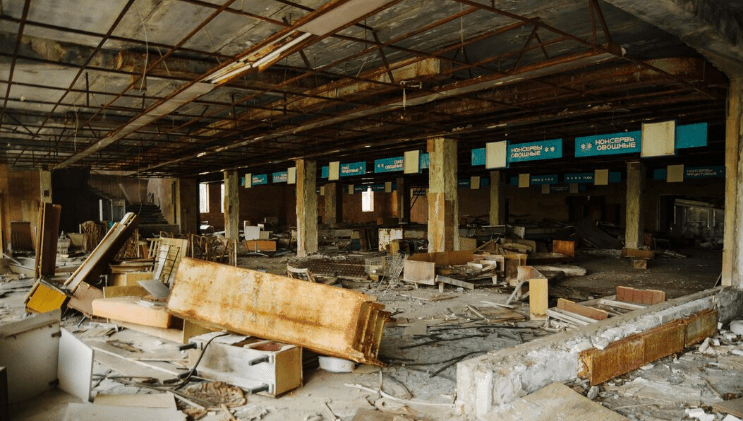
The contrast is what sets the Savannah case apart. This isn’t some midsize city’s obscure office park. It’s a square in one of America’s most photographed historic districts, where students studying architecture sketch wrought-iron balconies while tourists stroll around with iced coffee. However, the building does not carry the architectural weight that would typically spark a fight to save it, according to city officials, who have confirmed that it is not a contributing structure within the local historic district. A building may occasionally be located within a historic district without truly being a part of its narrative.
GSA intends to extend security fencing from the adjacent Tomochichi Federal Building and U.S. Courthouse and landscape the site after demolition, which is anticipated to take about three months. It’s important to keep in mind that during a renovation project in 2023, that courthouse partially collapsed, injuring multiple workers and raising unsettling concerns about the condition of the city’s aging federal infrastructure. It’s difficult to avoid making the connections. Even though no one at GSA would put it that way, there is a pattern here: a government building collapses in the middle of renovations, another is designated for demolition a few blocks away.
There are also inconveniences in the real world. During the demolition phase, State Street between Whitaker and Barnard will be completely closed for two to four weeks. This is a significant disruption in a downtown designed for horse carriages and narrow sidewalks. Business owners in the area have experienced similar situations in the past, most recently during the courthouse collapse, when entire blocks abruptly closed.
This isn’t just Savannah. After a preservation report revealed that the building had lost its historic character decades ago, SCAD recently bought an empty office building close to Forsyth Park, paving the way for its own demolition. Whether a building is in a historic district or not, it usually doesn’t survive if it doesn’t have a clear, contemporary purpose. It’s just a different owner and a different process.
It’s still unclear what will happen to the Telfair Square lot after the grass is planted. GSA has not stated whether it plans to hold the land as green space indefinitely or sell it at some point. Even in a city that takes pride in clinging to the past, it seems that this demolition is less about a single building and more about Washington discreetly testing how much of its real estate portfolio it can shed, one underutilized property at a time.
