


When two people who truly don’t get along are made to share a space, a certain kind of tension arises. That tension exploded throughout the US Capitol on Wednesday, June 25, during a private Republican luncheon. According to multiple accounts from those in attendance, President Donald Trump and Senator Bill Cassidy engaged in a shouting match that left colleagues sitting in awkward silence, unsure of whether to step in or just wait it out.
In advance of important legislative battles, the meeting had been loosely billed as a chance for Trump to unite Senate Republicans. Rather, it turned into a public reckoning for months of simmering resentment over the Iran war, over procedure, and over the fundamental question of whether a sitting president owes his own party an honest accounting of what America is actually doing abroad. “You have not told the American people what’s going on,” Cassidy reportedly told Trump face-to-face on Wednesday.
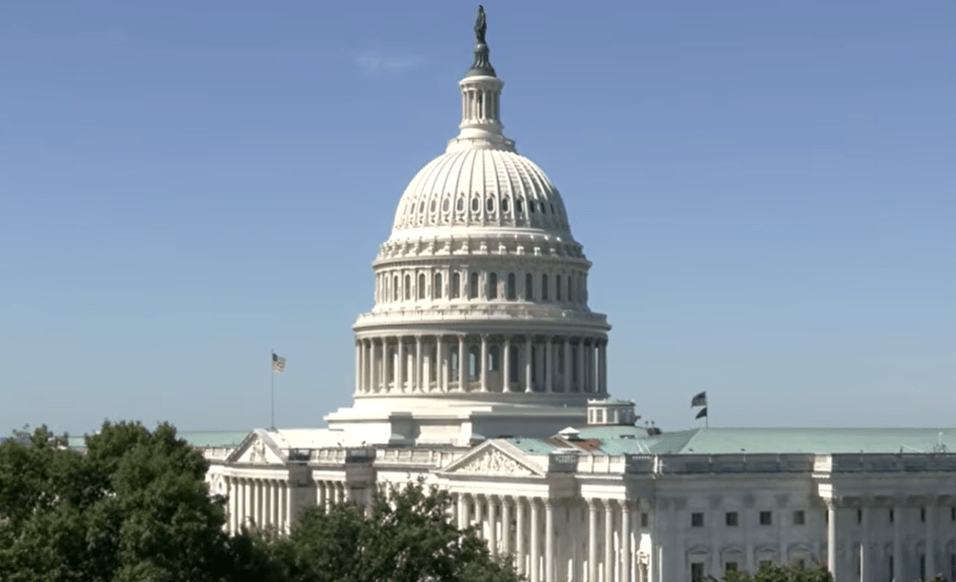
Cassidy, who by now has little left to lose after Trump ended his political career by endorsing a primary opponent, apparently decided that Wednesday was the day to say so out loud. The military operation in Iran was scheduled to conclude in four weeks. It had been four months. No definite goals had been accomplished, or at least none had been made public. It’s worthwhile to consider what it takes for a sitting senator—from the president’s own party, no less—to make such a direct statement in front of their peers. It might have felt less like bravery and more like basic math to Cassidy, liberated from the calculations of a politician who still had to win a primary. He had already lost the crucial vote. He could afford this one.
Several people in the room reported that Trump’s response was loud and quick. He motioned for Cassidy to take a seat. Cassidy didn’t. He was referred to by Trump as a “lunatic.” According to his own account, Cassidy matched the president’s volume and tone, at one point referring to Trump as his “brother”—a claim that Trump vehemently denied. Cassidy’s seatmates discreetly urged him to defuse the situation after it continued long enough. He finally took a seat. Once more, the room breathed.
In a way, what transpired after the confrontation was almost more illuminating. Vice President JD Vance and special envoy Steve Witkoff personally briefed Cassidy on the state of the Iran situation at the White House a few hours after the shouting match. After that, he went back to Capitol Hill and changed his vote, opposing a separate war powers resolution, which was the same type of legislation he had supported the day before. On X, he wrote a thank-you. 47-50-1 was the measure’s failure. Later that night, Trump expressed gratitude to Senate Majority Leader John Thune on social media and acknowledged Cassidy’s change of direction with approval.
That series of events is both predictable and subtly depressing. A senator gets up, speaks out loud and at great personal expense, gets a briefing that at least partially resolves his concerns, and then returns to line. It probably depends on where you began the day politically as to whether that is a sign of the system functioning or just the president taking a challenge and regaining control. The conversation was referred to by Senator Tommy Tuberville as “halftime talk.” When asked if the meeting had fulfilled its stated goal of unity, Senator John Cornyn entered an elevator without responding and allowed the doors to close.
The picture of Cornyn in the elevator with the doors sliding shut seems to be the most accurate representation of the true positions of a sizable portion of the Republican Senate caucus. Watching the Iran war drag on and the approval ratings slowly decline, they are both publicly compliant and privately frustrated. They wonder how all of this will play out in their home states come November. According to a Republican who has spoken to a number of vulnerable members, they watch the same data as everyone else while frantically trying to avoid being the next person to yell. On Wednesday, Cassidy was the only one willing to do that for a brief period of time. He won’t serve as a senator for very long. That might be more important than it first appears.
