


The conflict between a 170-year-old French luxury house and a tea brand over a flower is almost poetic. A geometric flower, not a real one. Four petals, a diamond center, clean lines. the type of logo that appears to have been carefully thought out and developed over several weeks. It seems that someone did. And that’s part of what made this whole thing so messy.
Molly Tea, a Shenzhen-based bubble tea chain that has become somewhat of a Gen Z favorite throughout mainland China, was defeated by Louis Vuitton earlier this week by a court in Suzhou, China. The Suzhou Intermediate People’s Court ruled that Molly Tea had infringed upon seven of Louis Vuitton’s registered trademarks, centered on LV’s iconic four-petalled monogram flower — a design the French house has been using since 1896. The damages include 300,000 yuan in legal fees and 10 million yuan in economic losses. At current exchange rates, that’s roughly US$1.5 million.
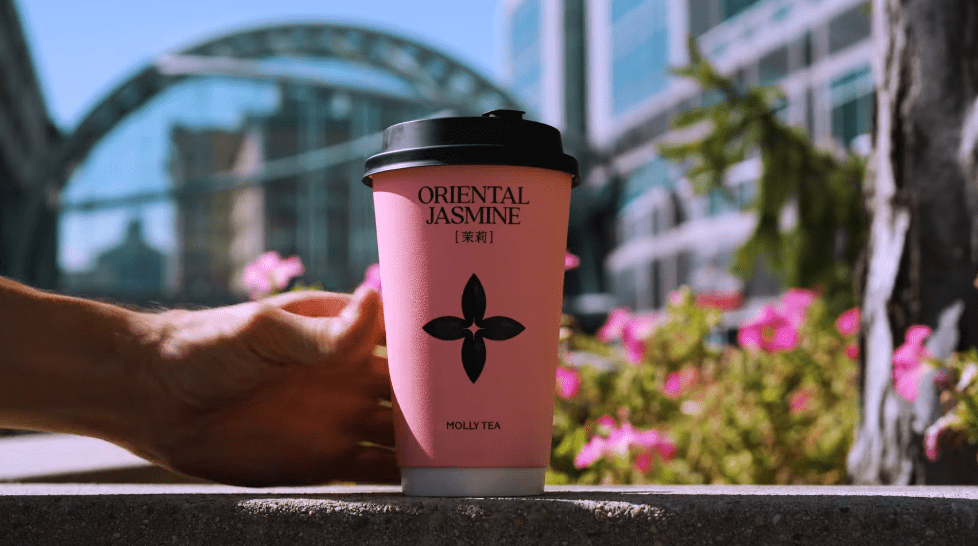
Molly Tea, for its part, says it plans to appeal. The brand has also quietly updated its logo on its WeChat mini-program, swapping the original black-and-white version for a colored one. It’s unclear if that’s a legal precaution or a rebranding strategy. Most likely both.
What makes this case genuinely interesting isn’t just the dollar figure — it’s the reaction it triggered. Weibo erupted under the hashtag “LV you have no one behind you” just hours after the decision began to circulate on Chinese social media. There was a passionate argument that LV shouldn’t own the diamond-floral motif. Chinese internet users cited centuries of visual culture that predates Paris fashion weeks by a wide margin, as well as ancient architectural patterns and ornamental features on the traditional pipa instrument. The hashtag “LV sued Molly Tea, ordered to pay 10 million renminbi” received millions of views.
Whether any of those historical parallels will have legal weight in an appellate court is still up for debate. Design lineage is genuinely complex; similar motifs do appear independently across cultures, and trademark law doesn’t always have the subtlety to resolve that. However, it’s also important to note that Tenkiiiii, a Shenzhen design studio, was well-known for producing “oriental aesthetics” for food and beverage startups when it created Molly Tea’s packaging in 2023. The defense failed to convince the court whether the similarity to LV’s monogram was deliberate, accidental, or somewhere in the middle.
Perhaps this case garnered so much attention because Molly Tea is a big business. Since its founding in 2021, the company has operated over 2,300 stores in mainland China as well as about 50 locations abroad, including the United States, Canada, Australia, the United Kingdom, Thailand, and Indonesia. That’s an impressive footprint for a business that is only four years old. The brand seems to have grown quickly enough to remain unnoticed until it was no longer able to do so.
Louis Vuitton, meanwhile, has been quietly but consistently aggressive about protecting its trademarks in China. The brand officially filed this particular suit in May 2025, and the case moved through the system in just over a year — relatively quick by international litigation standards. Over the past ten years, China’s intellectual property courts have grown significantly, and cases like this one are increasingly being observed as indicators of how seriously the nation takes IP enforcement.
What happens next depends largely on how Molly Tea’s appeal is structured. The cultural argument — that LV’s flower has roots in shared visual history — is compelling to a general audience, less so in a courtroom. Watching this unfold, there’s a real question about whether the appeal changes the outcome or simply buys time. In any case, neither brand has complete control over the central logo, which consists of four petals, a diamond, and clean lines. It is now part of the narrative.
