
There’s a moment that every plant manager in this country seems to have lived through. A new hire walks in — polished resume, four-year degree, confident handshake — and can’t read a wiring schematic. Can’t set up a CNC lathe. has never spent more time on a shop floor than on a campus tour. For the next six months, the manager tries to reverse-engineer what three years of tuition couldn’t produce while grinning and saying something tactful. You can see why some of the nation’s largest manufacturers have quietly stopped waiting for academic institutions to find a solution when you multiply that moment by a thousand plants.
This movement is not on the periphery. Across the industrial Midwest, the Gulf Coast, and the manufacturing corridors of the South, heavy manufacturers — firms that make turbines, fabricate steel, assemble electronics, and process chemicals — are opening private training academies tied directly to their production lines. These seminars are not lunch-and-learn events. Some of them run 12 to 18 months, carry industry-recognized credentials, and feed graduates straight into full-time positions. From an employer’s point of view, the math is getting harder to dispute.
The context matters here. The American educational system diverted a whole generation from technical work for roughly thirty years. The shop class vanished. There was a covert defunding or folding of vocational programs. Whether explicitly stated or implied, the message was that everything else was a consolation prize and that college was the way forward. Manufacturers took the fallout gradually at first, then all at once. The shortage of skilled workers today is estimated to be in the hundreds of thousands. Demand for industrial mechanics, electricians, welders, and pipe fitters continues to grow while the pipeline remains thin.
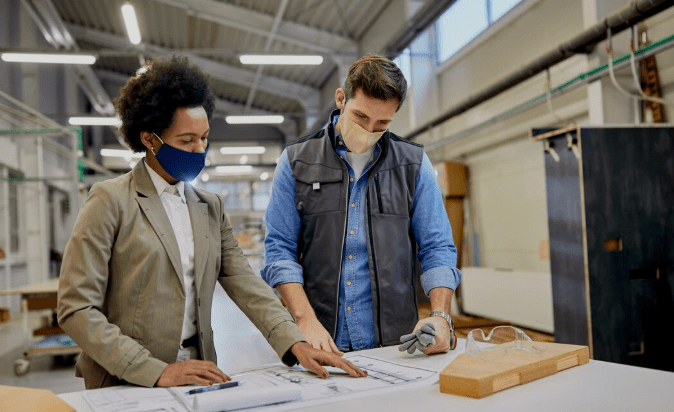
The emergence of AI-driven construction demand is what has changed recently. At a rate that would have seemed improbable five years ago, data centers are expanding across the nation. To construct and maintain each one, massive amounts of mechanical systems, electrical infrastructure, and skilled labor are needed. The most prominent example of a private sector organization realizing it can no longer outsource talent development is likely Meta’s America’s Workforce Academy, which was introduced this year with a $115 million initial investment and a job guarantee for each graduate. It’s also a signal that other large industrial players have been watching closely.
The private academy model works differently than a university partnership, and the difference is worth sitting with. A manufacturer-run program controls the curriculum, the timeline, the tools used in training, and the standards being taught. Over the course of two academic years, there is no committee that negotiates course requirements. The curriculum is altered for the following quarter if the industry switches to a new welding procedure or a different kind of programmable logic controller. Regardless of their merits, universities move slowly. Factory floors don’t.
There’s a genuine tension in this shift that doesn’t get discussed enough. Graduates frequently enter a system that is tailored to the workflow of a single employer when manufacturers construct closed training pipelines. The deeper institutional knowledge is proprietary, but the credential is somewhat transferable. It brings up important issues regarding career mobility and power dynamics between a skilled worker and the organization that trained them. Not everyone who participates in these programs will feel they received the same treatment, and it’s still unclear how those dynamics will develop over time.
However, observing this from the outside, it’s difficult to ignore the fact that the manufacturers who took the initiative appear less nervous than their rivals. They’re not hoping a nearby community college will update its curriculum or waiting for graduation cycles. They now acknowledge that, like logistics or quality control, talent development is an essential business function. That’s a significant mental shift for an industry that once assumed workers would just appear.
The irony is that trade schools are now considered the forward-thinking option. Ten years ago, that would have sounded weird. It doesn’t anymore.
